
 By
By 
Have you ever heard of the practice of Lectio Divina? It’s a prayer method I’ve been using quite a bit lately and it has had quite an impact on me.
Originating in early monastic communities, it has experienced a resurgence in recent years and is just as relevant and helpful now as it was then. Lectio Divina is a way of praying with scripture, meditating on God’s Holy Word and it has helped me experience God in a deeper way than ever before.

Lectio Divina for Busy Moms: A Gentle Way to Pray with Scripture
There are seasons in life when prayer feels natural and flowing and seasons when it feels… scattered. If you’re a mom, chances are you know exactly what I mean. Prayer squeezed in between school drop-offs, dishes, doctor’s appointments, and that one load of laundry that never seems to end can feel anything but peaceful.
That’s where Lectio Divina comes in.
Lectio Divina isn’t about praying more. It’s about praying more gently. It invites us to slow down just enough to listen – not perfectly, not for long stretches of time, but honestly and faithfully, trusting that God will meet us right where we are.

What Is Lectio Divina?
Lectio Divina is an ancient way of praying with Scripture that dates back to the early Church. It started in monasteries and expanded from there to religious communities like the Carmelites and Benedictines. The name simply means “divine reading.” But this isn’t Bible study, and it’s not about analysis or commentary.
Lectio Divina is about relationship.
Instead of asking, “What does this passage mean?” we ask,
“What is God saying to me today through these words?”
It’s a prayerful conversation with Scripture, where we listen far more than we speak.
Why Lectio Divina Works So Well for Moms
One of the most beautiful things about Lectio Divina is that it’s flexible. It can be prayed in 20 minutes… or in 5. It can happen in silence… or with kids playing in the next room.
It doesn’t require special materials, perfect quiet, or a pristine spiritual mindset. It simply asks for presence.
For busy moms, that matters.
Lectio Divina gives us permission to:
- Pray without rushing
- Stop striving for “perfect” focus
- Let God lead instead of us doing all the work

The Four Simple Steps of Lectio Divina (Mom-Friendly Version)
You’ll often hear that Lectio Divina has four steps. Don’t let that intimidate you — think of them more as gentle movements, not rigid rules.
1. Lectio — Read
Choose a short passage of Scripture. The Gospel of the day, a Psalm, or even just one or two verses is enough.
Read the passage slowly. If possible, read it twice.
As you read, notice:
- A word or phrase that stands out
- Something that catches your attention
- A line that feels comforting… or challenging
You don’t need to know why it stands out. Just notice it.
TIP: If you have the Hallow app, they have Lectio Divina on there. They take one phrase from one of the day’s Mass readings (usually the Gospel) and read it slowly for you a couple of times, with silence built in to allow you to reflect on it. Hallow has a free version that includes Lectio Divina.

2. Meditatio — Reflect
Now, gently sit with the word or phrase that caught your attention.
You might ask:
- Why did this word stop me?
- How does this connect to my life right now?
- What feeling does it stir in me?
This isn’t about forcing insight. Sometimes the reflection is clear. Sometimes it’s quiet. Both are okay.
Here’s how I see it. You have to let go and let the Word take you wherever you’re going to go. This is where it can be difficult for me at times. I can be too much of a control freak at times, trying to dissect the words, to discern meaning from them, to sort them out and organize them into my own little filing system in my brain.
But Lectio Divina is of the heart and soul, not of the mind. It’s about FEELING the words and absorbing them into your very being. I find it sometimes to be like free word association.
As you slowly read or listen to the passage, don’t try to analyze it and figure out what is meant by it. Instead, pay attention to whatever thoughts, memories, and images come to mind as you read (and reread) the words.

3. Oratio — Respond
Next, respond to God in prayer — in your own words.
This can be:
- A thank you
- A question
- A worry you need to hand over
- A simple, “Lord, I’m tired.”
There’s no right way to do this. God isn’t grading your prayer. He’s receiving your heart.
I attend “Praying in Color” sessions with a spiritual director friend of mine. We respond by brainstorming the words that come to us and praying by creating art. These aren’t masterpieces. They’re simple doodles with colors and shapes that allow us to go deeper into our reflections.

4. Contemplatio — Rest
Finally, spend a few moments simply resting in God’s presence.
No words. No agenda. Just being.
If your mind wanders (and it will), gently bring your attention back. Even a minute of this quiet presence matters.
Sometimes, this is it for me for this particular session. Other times, I feel particular moved by the experience and I feel the need to extend it into another activity.
That may mean that I get out my journal and I write for a while. I might pull out some clay and muck around with it, my hands moving through the clay becoming another form of the prayer. I might paint or create collages or I might even put on some inspirational music and dance my prayer.
Still other times, my head may feel like it’s spinning – so full of thoughts and ideas that it may burst. In that case, I generally need to get out in the fresh air and go for a walk to clear my head (or perhaps focus my head is a better way to put it).
If that’s not possible right then, I make note of the verse and the words that came to me during Lectio so I can come back to it later.
Often, I will end up mulling this over as I carry about my daily routines and I will see it appearing in other ways and other parts of my life. I may revisit this verse and the words that came to me again and again the next few times I practice Lectio Divina.
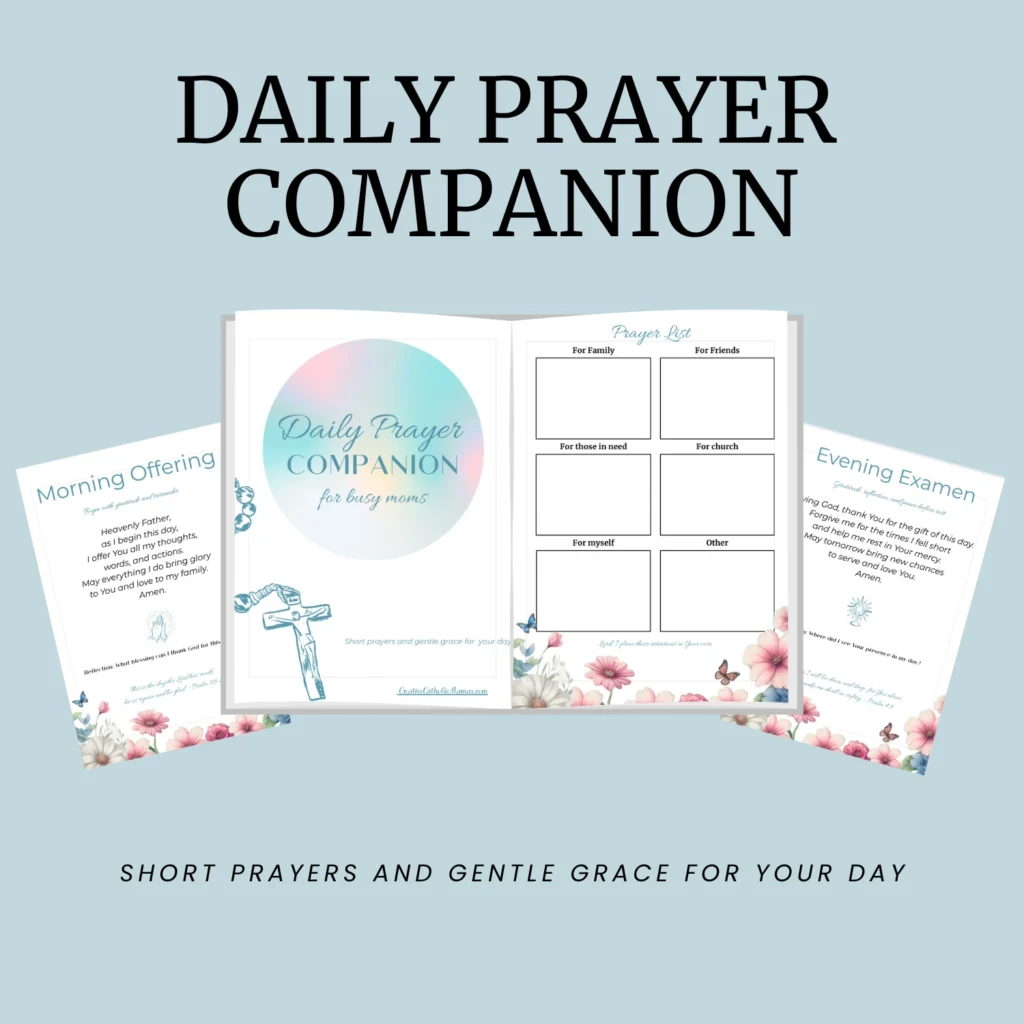
Grab your FREE Daily Prayer Companion here >>> Prayer Companion

What If I Don’t Have Time for All Four Steps?
Here’s the secret most moms need to hear:
You don’t have to do all four steps every time.
Some days your Lectio Divina might look like:
- Reading one verse while your coffee brews
- Holding onto a single word all day
- Whispering a prayer while folding laundry
That still counts.
Lectio Divina isn’t about completing a process. It’s about opening a door, even briefly, and letting God step into your ordinary moments.
Lectio Divina in Everyday Life
You can weave Lectio Divina into your day in simple ways:
- Read Scripture during morning quiet time, the kids’ nap time, or while in the school pickup line
- Keep a verse on a sticky note by the sink
- Return to your chosen word during stressful moments
- Pray it again while walking, driving, or doing dishes
God is not confined to your prayer corner. He meets you in the middle of real life.
A Gentle Invitation
If your prayer life feels unsettled or dry, Lectio Divina offers a way forward that doesn’t demand more energy than you have. It invites you to listen, to notice, and to trust that God’s Word is alive even in the middle of your busy, imperfect days.
You don’t need to pray longer.
You don’t need to pray better.
You just need to show up.
And God will do the rest.

What the Catechism of the Catholic Church has to say about Lectio Divina:
CCC 1177 The hymns and litanies of the Liturgy of the Hours integrate the prayer of the psalms into the age of the Church, expressing the symbolism of the time of day, the liturgical season, or the feast being celebrated. Moreover, the reading from the Word of God at each Hour (with the subsequent responses or troparia) and readings from the Fathers and spiritual masters at certain Hours, reveal more deeply the meaning of the mystery being celebrated, assist in understanding the psalms, and prepare for silent prayer. The lectio divina, where the Word of God is so read and meditated that it becomes prayer, is thus rooted in the liturgical celebration.
CCC 2708 Meditation engages thought, imagination, emotion, and desire. This mobilization of faculties is necessary in order to deepen our convictions of faith, prompt the conversion of our heart, and strengthen our will to follow Christ. Christian prayer tries above all to meditate on the mysteries of Christ, as in lectio divina or the rosary. This form of prayerful reflection is of great value, but Christian prayer should go further: to the knowledge of the love of the Lord Jesus, to union with him.
For more ideas on living a prayer-filled family life throughout the liturgical year, explore the rest of the resources here and consider saving this post to return to when you need fresh inspiration.
- How to Find Time to Pray
- How to Pray without Ceasing
- The Pope’s Monthly Prayer Intentions
- How to Have a Better Quiet Time with God
- Praying the Angelus
- How to Foster Prayer in Your Family


