 By
By 
You may have heard sacramentals mentioned before and wondered about them. The first time I heard the word as a baby Catholic convert, I thought maybe it was just a different way of saying “sacraments”. They are somewhat related but not the same. So, what are sacramentals?
They are sacred things and prayers, like a rosary, holy water, medals, a crucifix, blessed candles, scapulars, and simple gestures like the sign of the cross. They do not give grace the way the sacraments do, but they help us open our hearts to it. They make room for God in the middle of dishes, car lines, and bedtime.

What Are Sacramentals? A Simple Guide for Catholic Women
These small helps carry peace into real life. A quick blessing with holy water before school. A decade of the rosary after dinner. A saint medal in a backpack, a candle lit for a sick friend. They steady the chaos, and they draw our families close around the Lord.
This guide will keep it simple. You will learn what counts as a sacramental and how to use a few of them at home. Keep reading for easy next steps and tips to make these holy helps part of your day.

What Exactly Are Sacramentals? A Simple Breakdown
Sacramentals are sacred signs, actions, or objects blessed by the Church. They prepare our hearts for God’s grace. They do not give grace the way the sacraments do. They help us notice God, welcome Him, and live with a steady faith at home.
The CCC (Catechism of the Catholic Church) says this: “Holy Mother Church has, moreover, instituted sacramentals. These are sacred signs which bear a resemblance to the sacraments. They signify effects, particularly of a spiritual nature, which are obtained through the intercession of the Church. By them men are disposed to receive the chief effect of the sacraments, and various occasions in life are rendered holy.” (1667)
Think of a small family altar. A blessed candle glowing at dinner. A crucifix on the wall. A little dish of holy water by the door. These simple things carry prayer into our homes. They point to Christ and shape the heart.
You will see sacramentals all through Scripture. Oil for healing, water for cleansing, salt for keeping and purifying. The early Church prayed with these signs. Over time, the Church gathered and blessed them with set prayers, so families could use them with confidence.

How do Sacramentals Work?
They work through the prayers of the Church and the faith of the person who uses them. When a priest blesses a rosary or a medal, the Church is praying with you. When you use it with faith, God uses that small act to soften your heart.
“Sacramentals do not confer the grace of the Holy Spirit in the way that the sacraments do, but by the Church’s prayer, they prepare us to receive grace and dispose us to cooperate with it.” (CCC 1670)
Common examples you can bring into your home:
- Holy water for the Sign of the Cross at the door
- Blessed candles for prayer time or during storms
- Rosary for a quiet decade after dinner
- Medals and scapulars as steady reminders of Jesus and Mary
- Crucifix in a central place to anchor the room
These helps are gentle, steady, and practical for busy women. They turn tiny moments into prayer.
Key Differences Between Sacramentals and Sacraments
Think of a garden. Sacraments plant the seed. Sacramentals water and tend the soil.
- Sacraments: Christ gave us seven of them. They give grace directly. Baptism gives new life. Confession forgives sin. The Eucharist feeds the soul.
- Sacramentals: Christ’s care still guides them, but they are helps. They prepare us to receive grace better. They stir faith, fight fear, and remind us to turn toward God.
Both are rooted in Christ and guided by the Church. They serve different roles. One gives life. The other protects and nourishes it.
For a busy home, this matters. Maybe you made it to Mass on Sunday, the heart of the week. Then Monday hits. A quick Sign of the Cross with holy water before school waters the seed. A rosary in your pocket during car line keeps the soil soft. A blessed candle during a hard evening calms the room. These small choices keep grace near during family duties, without adding weight.
You might also like: How to Spiritually Protect Your Home

The Church’s Teaching on Their Importance
The Catechism (CCC 1667–1673) teaches that sacramentals are signs that point to God and prayers that ask His help. They sanctify different moments of life. A meal, a room, a journey, a sickbed, a bedtime blessing. They place these moments in God’s care.
The Church says that sacramentals “express faith through signs,” and that their power comes from the prayer of the Church and the disposition of the person using them. In plain terms, the Church prays over them, and we meet that prayer with trust.
Priests bless sacramentals so we can use them with confidence. That blessing ties your home to the Church’s prayer. It builds trust, not only in the object, but in the steady tradition behind it.
Biblical roots deepen this trust:
- Oil used for healing and prayer
- Water as a sign of cleansing and new life
- Touching Jesus’ garment as an act of faith
- Ashes, palms, and blessed salt used as signs of repentance and blessing
From the early Church, Christians kept blessed items, prayed over the sick, and marked doors. Over centuries, the Church shaped these practices into clear rites. Today, you receive the same steady help, handed down with care.
In short, sacramentals help a home breathe prayer. They keep Christ in sight, warm the room like a small flame, and ready the heart for the grace He gives in the sacraments.

Everyday Sacramentals That Bring Grace into Your Home
Small holy signs fit right into family life. They do not add weight to your day, they lighten it. A rosary in your pocket, a holy water font by the door, a medal near your heart. These simple helps steady the mind and warm the room. They remind you that Christ walks into the laundry room, the kitchen, and the car line with you.
Prayers and Blessings as Powerful Sacramentals
Short prayers open your home to God’s care. The Sign of the Cross at wake-up and bedtime frames the day in peace. Grace before meals gathers scattered hearts at the table and honors God’s gifts. A blessing over a child’s room with holy water can quiet fear and help everyone sleep.
Build a small home blessing kit so prayer is always within reach:
- Small bottle of holy water and a jar of blessed salt
- A blessed candle for calm, focused prayer
- A prayer card with a home blessing or the St. Michael Prayer
Check out this post too: Catholic Living Throughout Your Day

Objects Like Rosaries and Medals: Tools for Devotion
Holy objects invite prayer into ordinary minutes. They are not decor, they are companions.
Below are common sacramentals and easy ways to use them:
- Rosary: The beads help you pray the life of Jesus with Mary. Each decade moves your mind from noise to focus. Try a decade after dinner while the kids clear the table, or in the car line. Example, one mom keeps a soft rosary in her pocket, so when tempers rise, her fingers find the beads and her voice softens.
- Scapular: A small cloth sign of living close to Mary. It reminds you to belong to Christ in simple, faithful ways. Wear it under your shirt. Touch it when fear spikes, and pray, Mary, keep me close to Jesus. Its quiet tug can feel like a mother’s hand when worry climbs.
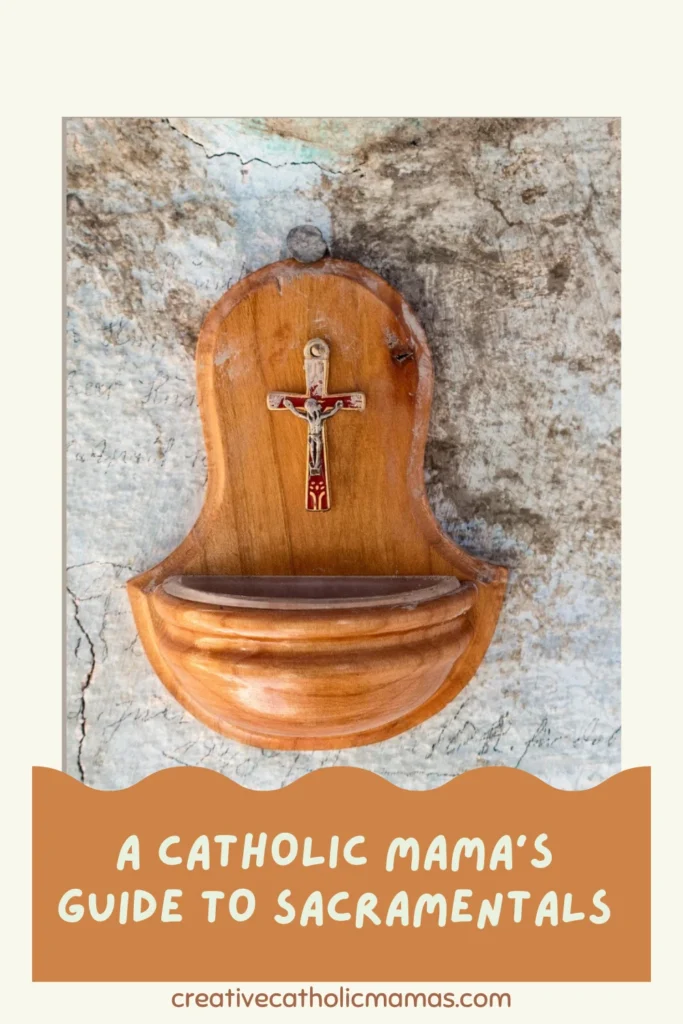
- Holy water font by the door: Water recalls baptism and new life. Place a small font near the exit. Trace the cross on your children’s foreheads before school. At night, bless doorways and ask for peace. A few drops can reset a tense evening faster than more words.
- Blessed palm from Palm Sunday: Palms honor Christ the King and point to victory through the cross. Tuck last year’s braided palm behind a crucifix or frame. Use it during family prayer in Holy Week. When the parish collects them for ashes, bring yours back and start fresh.
- Saint medals: A medal keeps a holy friend near. St. Thérèse for small daily acts of love. St. Joseph for steady work and protection. The Miraculous Medal invites trust in Mary’s care. Wear one during long newborn nights or hard teen years, and repeat, O Mary, conceived without sin, pray for us who have recourse to thee. You can even personalize a medal with initials or a wedding date to mark your family’s story with faith.
Personal touches make devotion feel alive:
- Engrave a family saint’s medal and give it at a baptism or birthday.
- Keep a small dish for rosaries on the kitchen counter, so prayer is as normal as snacks.
- Light a blessed candle when you pray for a sick friend, then text, “We prayed for you tonight”.
These holy helps do not ask for long hours. They invite short, steady moments that add up. They bring peace, stir faith, and keep your home under God’s care, right where life happens.

You might also like this post: How to Put God First in Your Life
How Sacramentals Can Transform Your Daily Prayer Life
Sacramentals fit right into ordinary minutes and make them holy. A touch of holy water at the door, a decade of the rosary after dishes, a saint medal over your heart. These small signs pull your mind toward God and keep your home steady. Many women notice simple fruit right away: more peace, stronger family bonds, and deeper trust when life feels heavy.
Start small, then let your habits grow. Picture the warmth of God’s presence in your living room, like a soft lamp that stays on through the night. That is what sacramentals do. They keep faith within reach.
Steps to Start Using Sacramentals Today
Begin with a few clear steps that fit your day. Keep it simple, loving, and consistent.
- Visit your parish for blessings
Bring your rosary, medals, candles, or a crucifix in a small bag. Ask after Mass, Father, would you bless these sacramentals? The blessing ties your home to the Church’s prayer. It also gives you confidence to use them. - Choose one sacramental to focus on
Pick one for this week. Holy water by the door, or a rosary in your pocket, or a blessed candle for evening prayer. One habit beats ten plans. Let it become as natural as setting the table. - Learn a related prayer
Pair the item with a short prayer. For holy water, pray, In the name of the Father, and of the Son, and of the Holy Spirit. For a candle, pray Psalm 27:1, The Lord is my light and my salvation. For a medal, pray, Jesus, I trust in You. Keep it short and honest. - Share with family
Invite your family into the moment. Trace a small cross on a child’s forehead before school. Hold a rosary together after dinner. Keep a gentle tone. Imagine the room filling with the warm light of God’s love. That sense of calm can settle hearts faster than long talks.
Build on this with one daily touchpoint: holy water in the morning, a decade of the rosary at night. Small, steady steps change the feel of a day.

Overcoming Common Misunderstandings About Their Power
Sacramentals are not magic. They do not work on their own. Their help flows through faith, your intent, and the prayers of the Church. A rosary is not a lucky charm. Holy water is not a spray for problems. They point to Christ, who gives the grace.
Superstition can sneak in when we are tired or afraid. You might think, If I wear this medal, nothing bad will happen. Faith speaks differently. God is with me in all things, and this medal reminds me to trust Him. We rely on God’s will, not on objects.
What difference do they make?
- Peace: Your body learns the rhythm of prayer through repeated signs.
- Unity: Family moments form around shared rituals, even short ones.
- Trust: You remember God is near, so fear loses its grip.
You can lead this in your home with confidence. Set the tone with a simple routine and a kind voice. Invite your family, and keep showing up. Grace grows in the daily yes.
Check out this post too: How to Have a Better Quiet Time with God

Sacramentals are gentle helpers for a Catholic home. They steady the day, point to Christ, and ready the heart for grace. A rosary in your pocket, holy water by the door, a crucifix in the hallway, each one keeps prayer within reach and your family held in God’s care.
Choose one sacramental this week and use it with love. Keep it simple and steady. Make the Sign of the Cross at the door each morning, or light a blessed candle during dinner prayer. Notice what shifts, your breath, your tone, the room’s peace.
Walk forward with hope. Let these small signs guide your steps, like holding Mary’s hand through joys and sorrows, while Christ’s mercy fills the house.
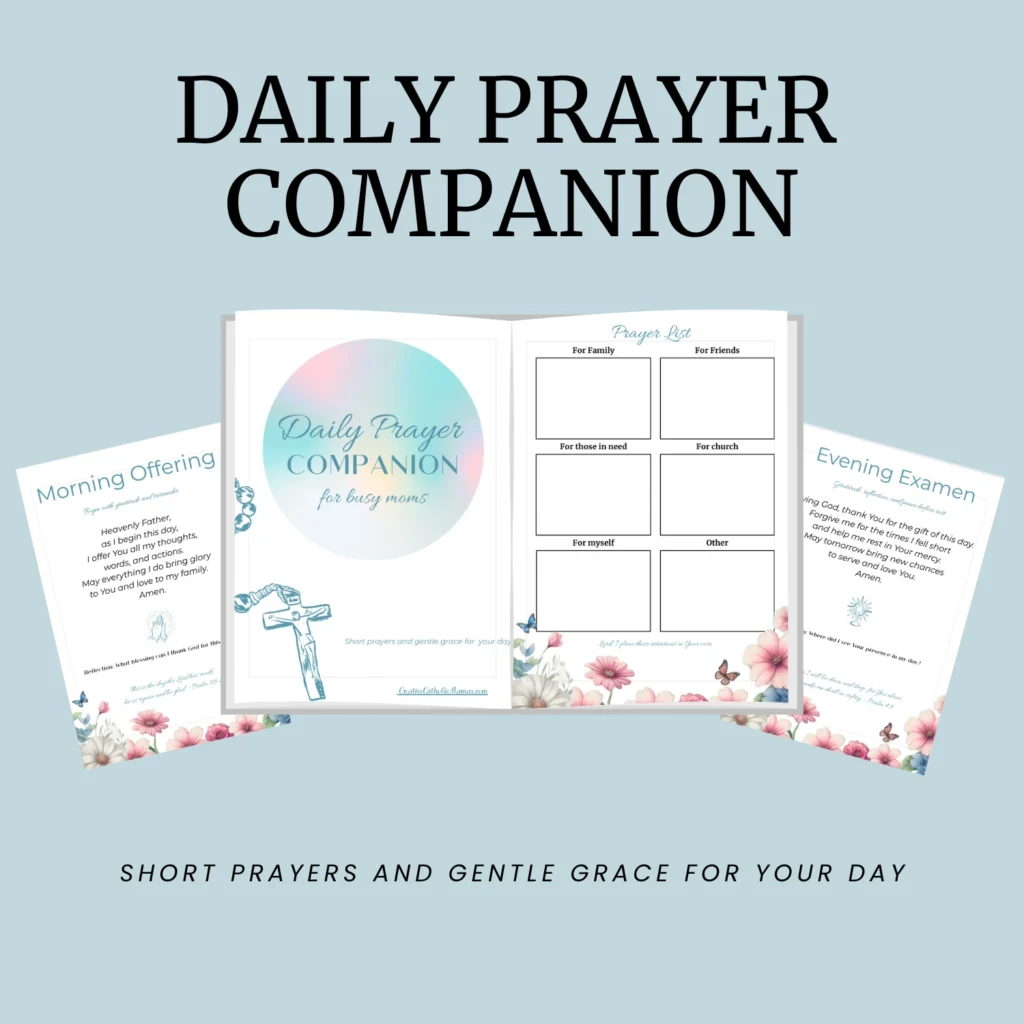
Grab your FREE Daily Prayer Companion here >>> Prayer Companion