 By
By 
Sometimes prayer feels hard. Not because we don’t want to pray, but because our minds are tired, our hearts are full, and silence feels anything but peaceful.
Words can feel like too much. Reading feels hard. Sitting still feels impossible.
That’s where Visio Divina can be such a gift.

Visio Divina: Praying With Sacred Art
Visio Divina means “divine seeing.” It’s a prayer practice that invites us to pray not with words, but with our eyes—by slowly and prayerfully gazing at a sacred image and allowing God to speak through what we see.
If you’ve ever felt drawn to an image of Jesus, Mary, a saint, or a piece of sacred art and found yourself lingering there without quite knowing why, you’ve already experienced a taste of Visio Divina.
What Is Visio Divina?
Visio Divina is similar to Lectio Divina, but instead of praying with Scripture, you pray with an image.
Rather than analyzing or interpreting the artwork, you simply receive. You notice what draws your attention, what stirs something in your heart, and what God might be gently revealing through that moment of seeing.
There’s no right or wrong way to do this. There’s no test at the end. The goal isn’t to “figure it out” but to be present.

Why Visio Divina Is Especially Helpful for Moms
As moms, our minds are often noisy. We’re holding schedules, worries, reminders, and responsibilities all at once. Visio Divina gives us a way to pray that doesn’t require a lot of mental energy or uninterrupted time.
You can practice Visio Divina:
- When you’re emotionally exhausted
- When words won’t come
- When Scripture feels overwhelming
- When you want to pray, but don’t know where to begin
It’s also a beautiful option for those of us who are creative, visual learners, or simply craving a quieter kind of prayer.

How to Practice Visio Divina (A Simple, Gentle Approach)
You don’t need anything fancy. Just a few quiet minutes and an open heart.
1. Choose an Image
Select a piece of sacred art—Jesus, Mary, a saint, a biblical scene, or even a religious icon. This can be a printed image, a prayer card, a book illustration, or an image on your phone.
Choose something that draws you in, even if you don’t know why.
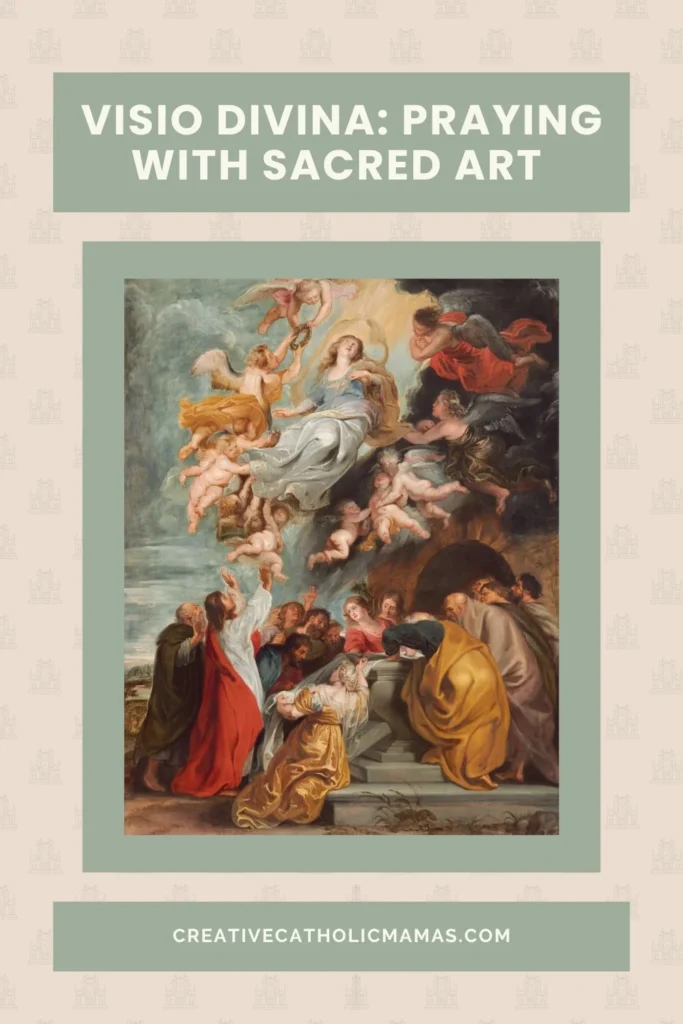
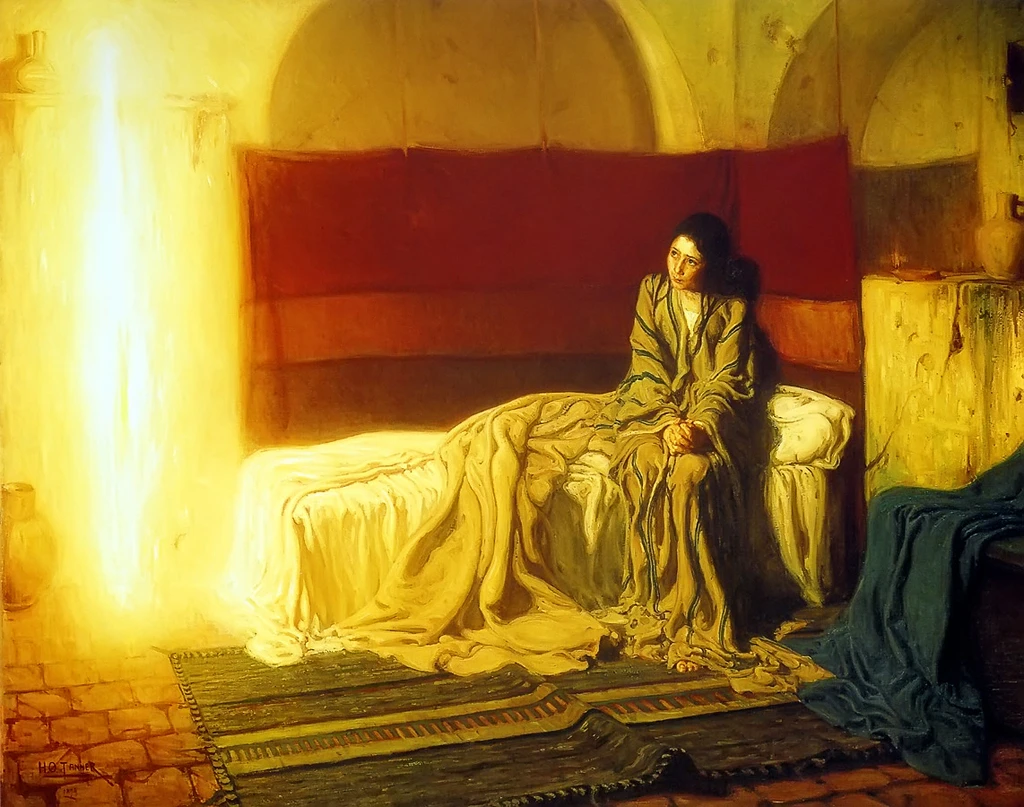
I’ve included some within this post that I have used with Visio Divina in the past.

2. Settle Into Stillness
Find a comfortable place. Take a few slow breaths. Ask the Holy Spirit to guide your prayer.
You might simply say:
“Lord, help me to see with Your eyes.”

Grab your FREE Daily Prayer Companion here >>> Prayer Companion
3. Gaze Slowly
Look at the image without rushing. Let your eyes rest naturally. Notice:
- Where your attention is drawn
- Colors, expressions, gestures, or symbols
- Any feelings that arise
There’s no need to analyze. Just notice. Often I find myself drawn to one part of the image and I simply allow my gaze to linger there.
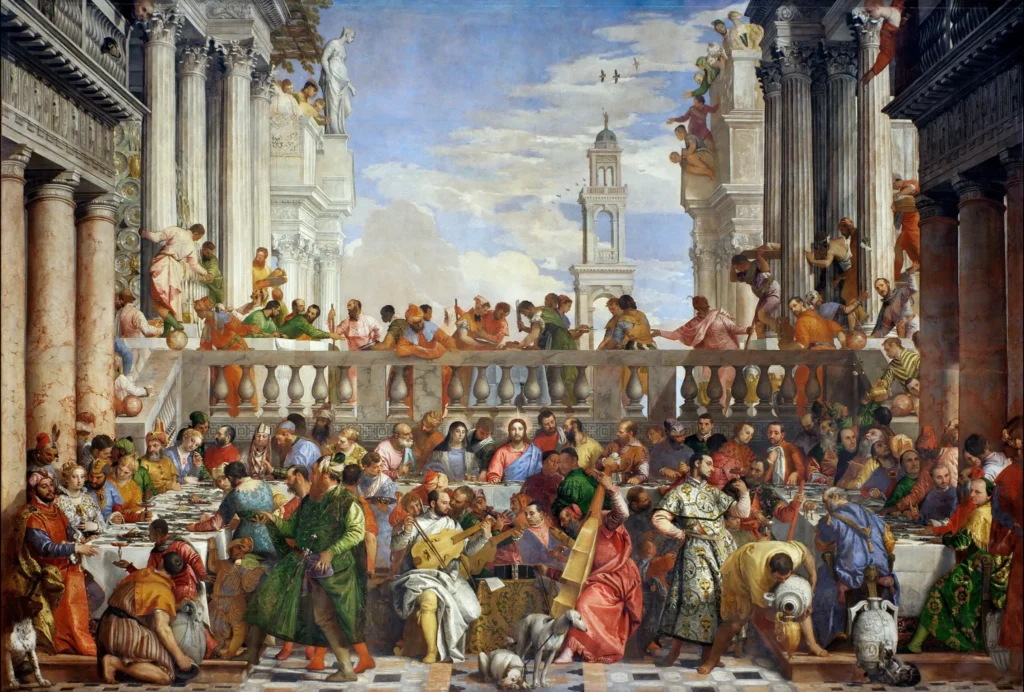
4. Listen With Your Heart
Often, after my first look, I like to close my eyes for a few moments – almost like clearing my palate when eating. Then, I take my second, longer look at the image.
With this second look, I like to begin by allowing my eyes to slowly sweep over the entire image a few times. I take note of what parts my eyes are drawn to and what parts my eyes tend to avoid.
As you continue to gaze, ask gently:
- What is God showing me here?
- What does this image awaken in me?
You may feel comforted, challenged, seen, or simply calm. You may receive a word, a memory, or a sense of peace. Or you may just sit quietly. That’s prayer too.

5. Respond Simply
End by responding to God in whatever way feels natural: a short prayer, gratitude, silence, or even journaling a few words. As with Lectio Divina, you may also choose to respond with art (sketching, doodling, painting, working with clay, etc).
You can close with the Sign of the Cross or a simple Amen if you’d like.

Visio Divina With Children (or in Family Life)
Visio Divina can also be adapted beautifully for children.
Sit together and look at a sacred image. Ask gentle questions like:
- What do you notice first?
- How does this picture make you feel?
- What do you think Jesus might be saying here?
There’s no need to correct answers. The goal is to help children learn that God speaks to us in many ways including through what we see.

When Visio Divina Feels “Quiet”
Some days, nothing profound happens and that’s okay.
Prayer isn’t always about feelings or insights. Sometimes it’s simply about showing up and being with God. Trust that even quiet prayer is forming your heart in ways you can’t always see right away.
A Gentle Invitation
If traditional prayer methods feel heavy right now, Visio Divina offers another doorway; one that is slow, spacious, and welcoming.
You don’t need perfect silence. You don’t need special knowledge. You just need a willing heart and a few moments to look and to be looked upon by God in return.
If you try Visio Divina this week, I’d love to know what image you chose and how it felt to pray this way.
You can find more images suitable for Visio Divina here:
- Liturgy Tools
- Visio Divina Images
- Visio Divina Images and Other Resources
- The Web Gallery of Art (search for a saint or other subject or theme)
For more ideas on living a prayer-filled family life throughout the liturgical year, explore the rest of the resources here and consider saving this post to return to when you need fresh inspiration.
- How to Find Time to Pray
- How to Pray without Ceasing
- The Pope’s Monthly Prayer Intentions
- How to Have a Better Quiet Time with God
- Praying the Angelus
- How to Foster Prayer in Your Family
- Lectio Divina for Busy Moms